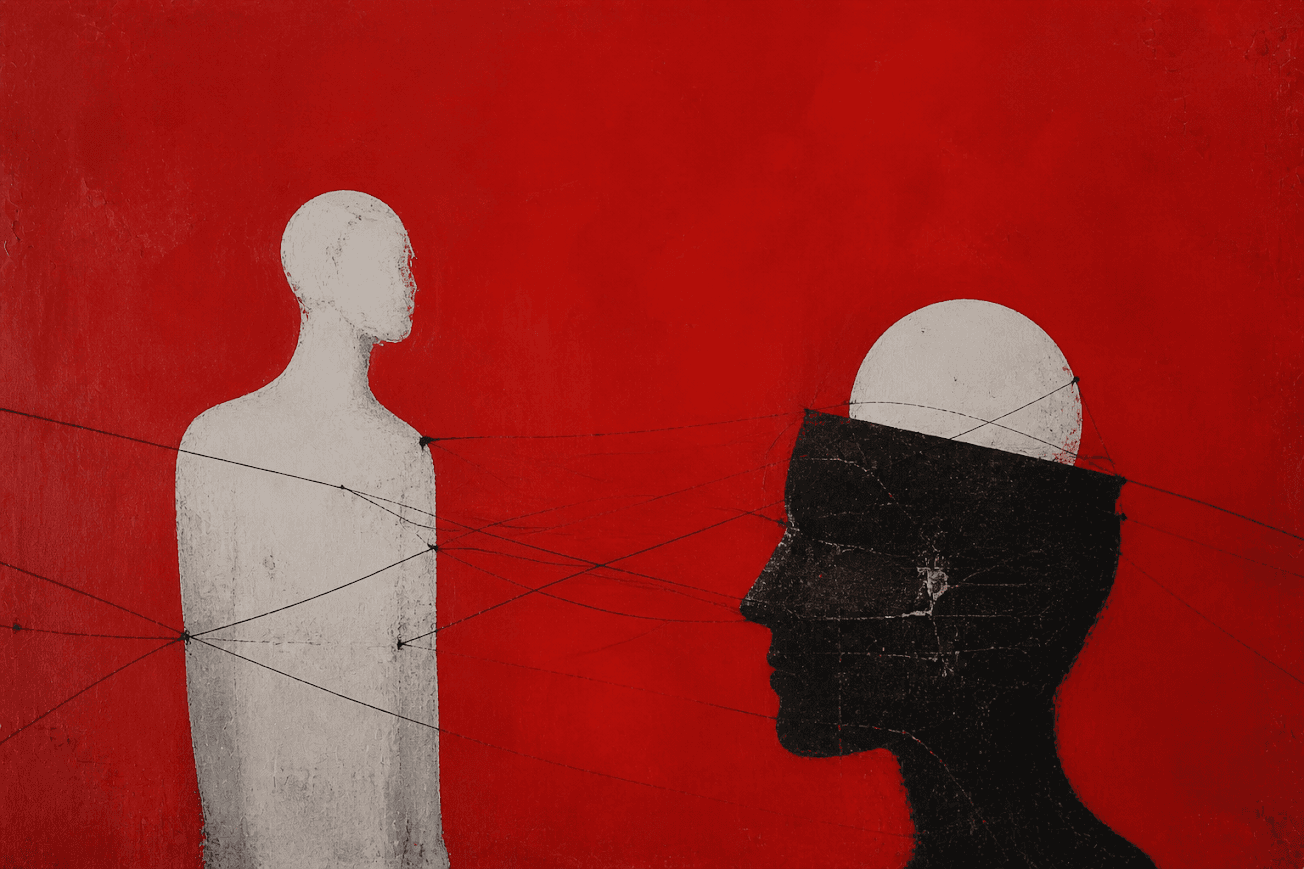
He didn’t seem to get along well with loneliness.
But I was most myself when I was alone.
People had definitions of me. They placed the most beautiful adjectives in front of my name. But anything placed in front of nothing has no weight. Whatever was not expected of me—that is what I was.
⸻
Sometimes a person discovers themselves most in places where no one is looking.
In crowds, everyone abandons a part of themselves.
Some notice it, others try to walk without stepping on the cracks between stones.
⸻
I could never recognize him in a crowd.
Alone, he was one person; among people, someone entirely different.
This was not merely an issue of adaptation.
It was as if there were two separate states, with no bond between them.
⸻
Trying to understand such a person is like trying to complete something missing.
What is said is never enough.
You begin to chase what is left unsaid.
And then you realize—you are no longer trying to understand the person in front of you,
but the possibility that could exist within them.
⸻
Without noticing, a person shifts places here.
At first you are looking from the outside,
then you step into the meaning itself.
⸻
Over time, the person does not actually change.
But the space you give them grows.
And as that space grows,
the room you leave for yourself shrinks.
⸻
At some point, it is no longer about them.
Not about how they are,
but about how you have reshaped yourself around them.
⸻
They appear whole.
And you accept becoming a fragment inside them.
But this acceptance is not noticed.
Because it happens slowly.
⸻
A person does not lose certain things all at once.
They let go little by little.
Without realizing.
⸻
Then one day they see:
What they thought they understood is still there,
but they are no longer the same.
⸻
And they do not notice it immediately.
There is no rupture.
Nothing breaks.
Nothing ends in a dramatic way.
⸻
Only certain things no longer function as they used to.
They remain in the same place,
but cannot stand in the same way.
⸻
What once came naturally
now requires effort.
They want to speak but do not speak.
Want to ask but postpone.
They wait where clarity could exist.
⸻
At first, they call this patience.
Then understanding.
⸻
But it is not.
⸻
Slowly they realize:
what they built there is no longer about the other person.
It has become something they grew inside themselves.
⸻
And as that thing grows
the other person does not shrink.
But reality becomes insufficient.
⸻
And there they remain, in a strange place.
Neither able to return to what they saw,
nor able to continue what they built.
⸻
Because one is real but feels incomplete.
The other is whole but does not exist.
⸻
Most often, a person chooses to stay there.
Not because they cannot leave,
not because they are forced to stay.
⸻
But because staying feels more familiar.
⸻
Then time passes.
And time does not solve anything.
It only deepens habits.
⸻
A person keeps looking at the same place.
What they see does not change.
But their gaze does.
⸻
After a while, they realize this:
what they were waiting for there
is no longer the other person.
⸻
It is the moment of their return.
⸻
And that moment never comes.
⸻
Because a person does not always lose things.
Sometimes they simply relocate them.
⸻
They leave what belongs to them
in a place they can no longer return to.
⸻
And in the end they accept this:
Neither what they were waiting for was lacking,
nor what existed was insufficient.
⸻
What was missing
was that the place they tried to return to
no longer belonged to them.
Writing is my way of understanding myself and the world. Through essays and reflections, I explore identity, language, and transformation — the small moments that shape who we are.
Stay connected — subscribe to my newsletter for new pieces and thoughts on writing and life.